Read also: New York City Marathon 2026: date, route and road closures ↗
Read also: How were Egypt’s pyramids built? The real clues ↗
Olympia and Athens are two different answers
The ancient Olympic Games began at Olympia in the Peloponnese. The first modern Olympic Games were held in Athens from 6 to 15 April 1896. Both places are in Greece, but the ancient occasion was a recurring gathering at a sanctuary, while the 1896 edition was organised as an international competition with its own sporting programme. The answer to “when were the first Olympic Games?” therefore depends on which era you mean. The conventional date for the first recorded ancient edition is 776 BC. The modern series began in 1896.
What happened at Olympia?
The Olympic sanctuary was devoted to Zeus. Visitors encountered temples, facilities for athletes and venues including a stadium and a hippodrome. Communities across the Greek world sent competitors, and their contests were part of a religious celebration. Over the centuries the programme grew to include races over various distances, combat events and equestrian competitions. A victory conferred prestige on the athlete and his home city, and the emblematic prize was a wreath made from an olive branch. The familiar modern picture of three medallists standing on a podium does not describe that ceremony.
Why do historians talk about 776 BC and Olympiads?
The year 776 BC is a conventional date drawn from written records rather than a proven founding date. The International Olympic Committee notes that the precise beginnings of the Games are entangled with mythology. The interval between editions is easier to identify. An Olympiad in antiquity meant the four-year cycle between Games and could be used to date other events. In everyday speech today, “the Olympics” usually refers to the competition itself. That distinction explains why an ancient writer might give an Olympiad when placing an event in time.
How did Athens become the host in 1896?
An international sporting congress in Paris in 1894 established the International Olympic Committee and set the first modern Games in motion. Pierre de Coubertin was central to the congress, but several people shaped the revival. Greece already had Olympic initiatives funded by Evangelos Zappas. The Greek delegate Demetrios Vikelas proposed Athens and became the IOC's first president. Georgios Averoff's funding helped rebuild the Panathenaic Stadium in marble. Choosing Athens gave the new project a visible link with Greek history, even though the competition was not based at Olympia.
What sports were played in 1896?
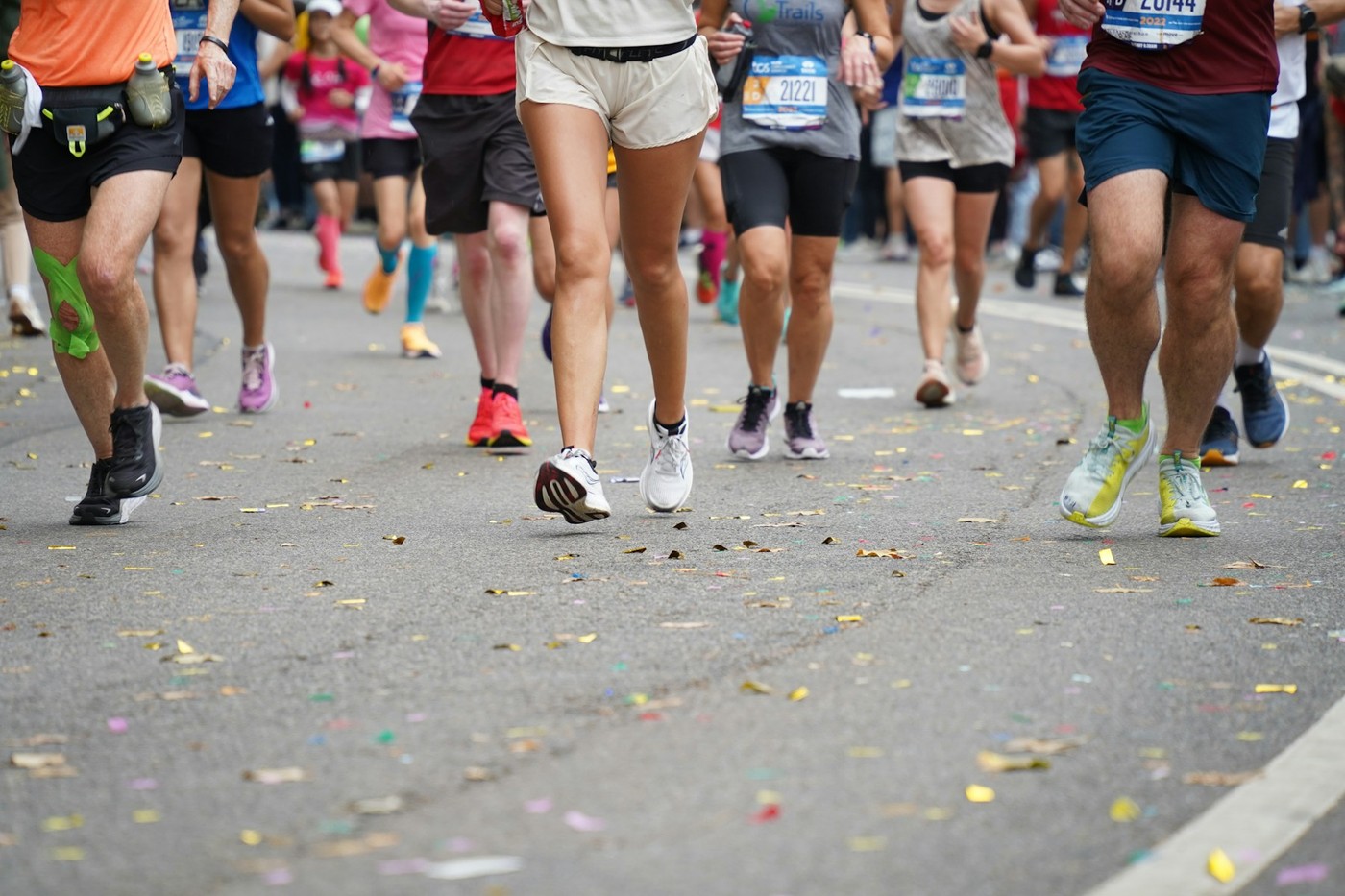
The IOC's historical archives count 241 athletes, 14 countries, nine sports and 43 events. The programme included athletics, cycling, fencing, gymnastics, shooting, swimming, tennis, weightlifting and wrestling. The Panathenaic Stadium was the principal venue, though several other sites were used. The marathon took runners from the town of Marathon to the stadium in Athens, where the Greek runner Spyridon Louis won. The event drew on a story associated with the Battle of Marathon. That ancient inspiration sometimes obscures an important detail: the marathon was absent from the ancient Olympic programme.
Why did first place earn silver?
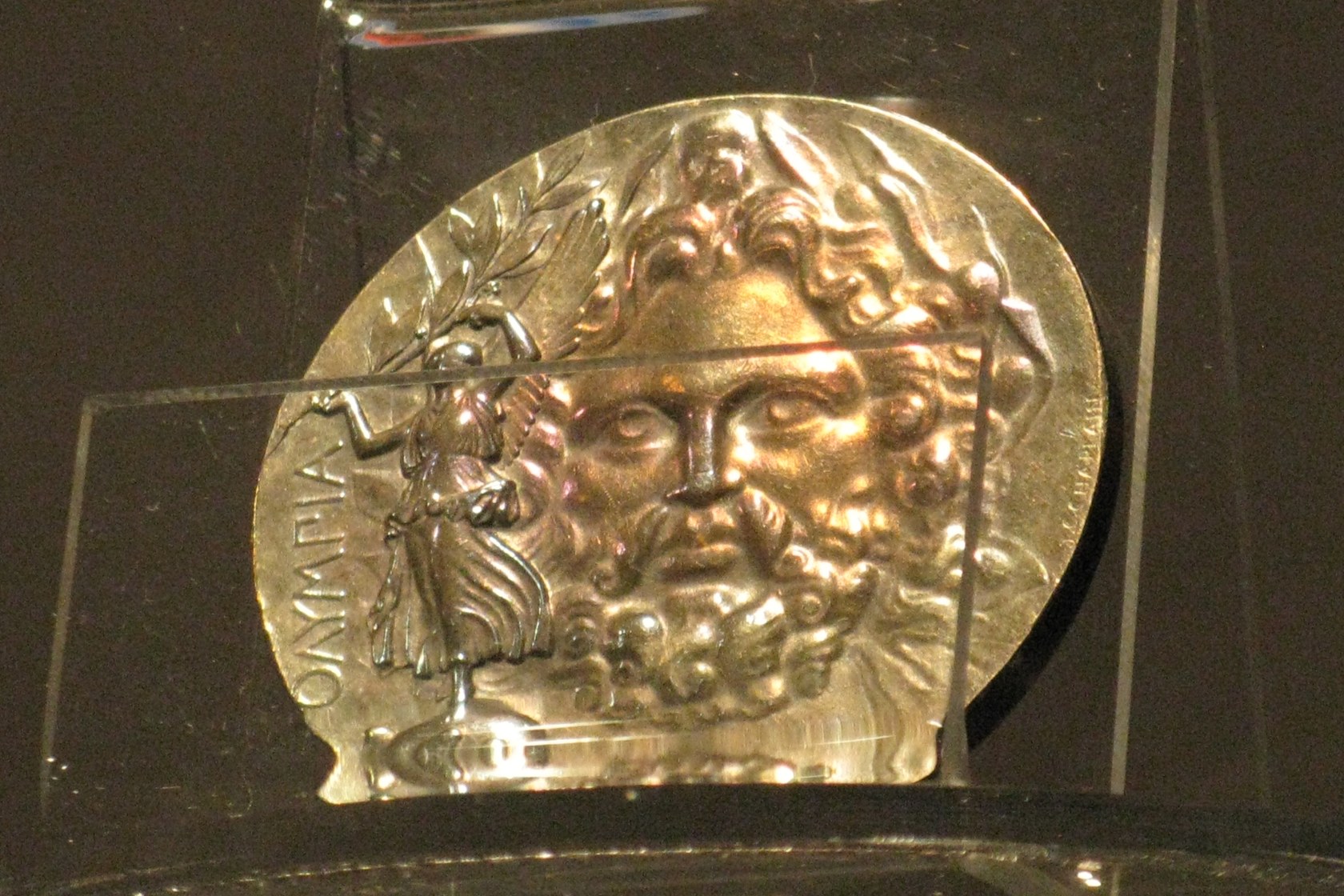
The winner in Athens received a silver medal and an olive branch. The runner-up was awarded a medal described as copper or bronze, along with a laurel branch. Third place carried no medal. Modern tables may list the Athens results as gold, silver and bronze; they are applying later categories to the recorded finishing positions. That presentation is handy for comparing editions, but it is different from a list of the objects handed out in 1896. An original silver medal from those Games can therefore be a first-place award.
Who was allowed to compete?
Ancient athletic contests were generally for men, and the official competitors at Athens 1896 were all men. Paris 1900 was the first modern edition in which women competed. The ancient record has a complication: in equestrian events the victory went to the owner of the horses, who did not have to be the person driving them. An ancient woman could thus be named as an Olympic winner through horse ownership. That does not show that she could enter the foot races, or that the rules admitted women to athletics on the same terms as men.
What survived and what was reinvented?
The modern Games drew on the Olympic name, the four-year rhythm and the symbolic standing of Greece. They moved away from a permanent site at Olympia and the religious function of the festival. The revival introduced an international organisation, a programme of sports with varied origins and the prospect of a different host for each edition. Even some familiar modern rituals, such as the torch relay, appeared later. Athens 1896 is a useful point of comparison because it shows where the organisers deliberately borrowed from the past and where they devised something new.
Frequently asked questions
Where were the first ancient Olympic Games held?
At Olympia in the Peloponnese, at a sanctuary associated with the worship of Zeus.
When did the ancient Olympic Games start?
776 BC is the conventional date of the first written record. The exact origins are unknown.
When and where were the first modern Olympic Games?
They took place in Athens, Greece, from 6 to 15 April 1896.
Who created the modern Olympics?
Pierre de Coubertin promoted the 1894 congress, alongside a broader effort involving Demetrios Vikelas, Greek organisers and donors such as Georgios Averoff.
What is an Olympiad?
Historically it is a four-year cycle between editions. In ordinary conversation “the Olympics” usually means the event.
Who won the marathon at Athens 1896?
The Greek runner Spyridon Louis, who finished first at the Panathenaic Stadium.
Why did the 1896 winner receive silver?
Silver was the first-place award that year. The familiar gold, silver and bronze arrangement became standard later.
When did women first compete in the modern Olympics?
They first competed at Paris 1900. The official Athens 1896 events had an all-male field.
Sources and further reading
- UNESCO — archaeological site of Olympia
- International Olympic Committee — origins of the Games
- Greek Ministry of Culture — Olympic revival
- International Olympic Committee — Athens 1896
- Ohio State University — tradition and reinvention
- International Olympic Committee — first women Olympians
- IOC Historical Archives — Athens 1896