Read also: Oxford Street pedestrianisation: access and transport changes ↗
Read also: Time zones: why a time also needs a date and a place ↗
The race is over: find your official result
The 2026 New York City Marathon took place on 1 November. New York Road Runners links to the official results on its race page. The route and closures below belong to that edition; use current transport and traffic advisories for travel now.
The sections below describe the situation at the time of reporting. For decisions today, follow the updated guidance at the start of this article.
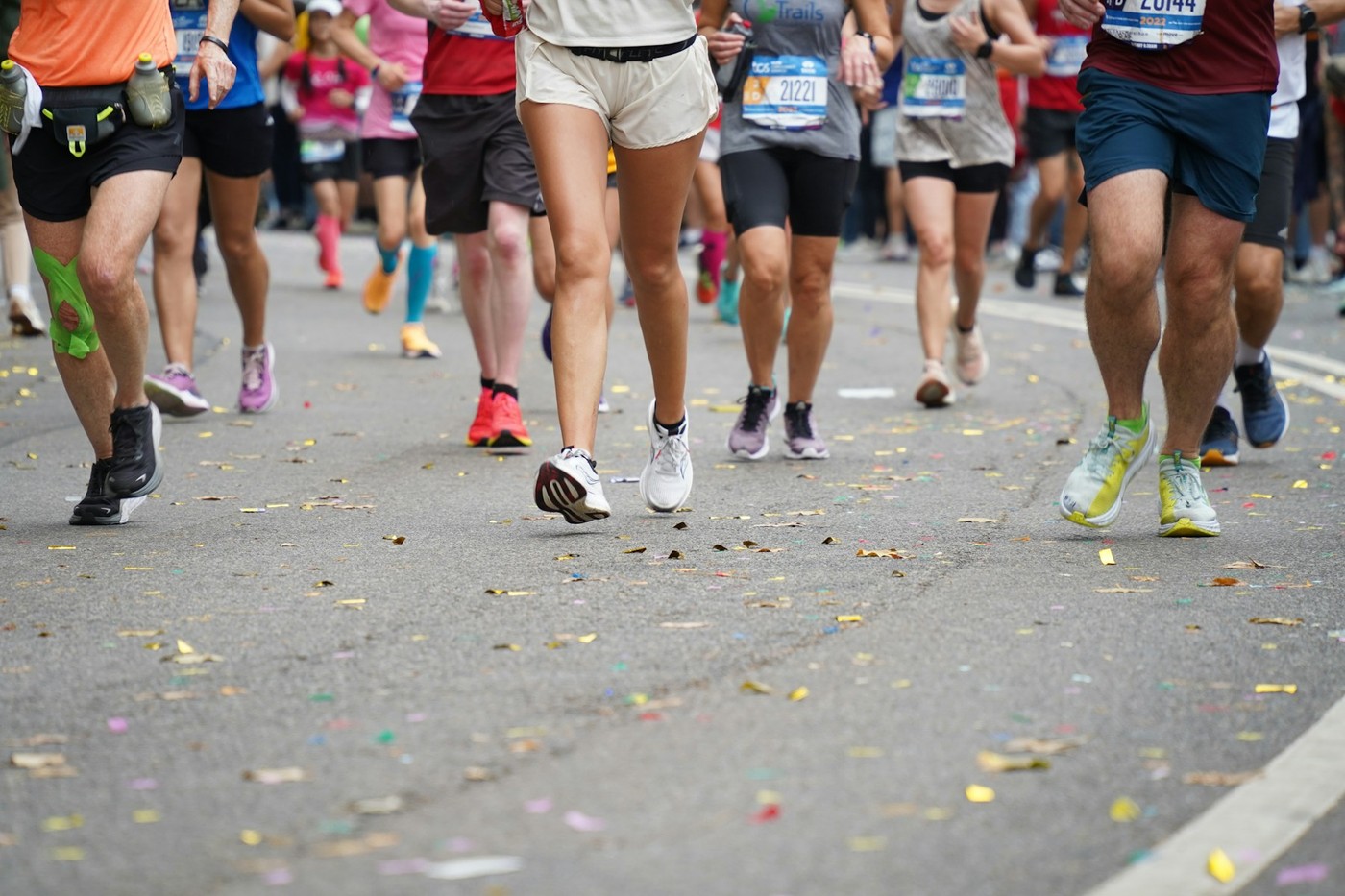
The 2026 New York City Marathon is scheduled for Sunday 1 November. Organiser New York Road Runners confirms a 26.2-mile course, approximately 42.195 kilometres, through the city’s five boroughs. It starts on Staten Island and finishes in Central Park, Manhattan. There is no single simultaneous start for every participant: different categories and waves have their own arrangements.
Runners, spectators and residents need different plans. A runner must follow individual race instructions; a supporter needs a viewing point and a realistic meeting arrangement; someone travelling across town needs to understand restricted access. This guide brings those needs together using information available on 29 October. The sporting timetable and the traffic plan overlap, but neither can replace the other when organising a journey.
Understanding the five-borough route
The course passes through Staten Island, Brooklyn, Queens, Manhattan and the Bronx before finishing back in Manhattan. That geography explains why disruption extends well beyond Central Park. A bridge closure can affect a journey nowhere near the finish, while a road filled with runners can prevent a direct crossing between otherwise neighbouring streets.
Use the official map to identify where you want to stand and which side you can approach from. A short distance on a map does not guarantee a short walk when barriers are in place. Choose both an arrival station and a departure station, rather than relying only on walking distance. Follow instructions on the ground, where access controls may change the most direct pedestrian route.
The Bronx section changes in 2026
NYRR has announced a limited adjustment in the Bronx. After Willis Avenue Bridge, runners use East 135th Street and Alexander Avenue, then turn at East 141st Street before Third Avenue and East 138th Street towards Madison Avenue Bridge. This does not change the event into a different distance: the official course remains a marathon.
The practical difference for residents and supporters concerns the exact streets occupied by the race. Do not choose a crossing or viewing position using only a saved map from a previous year. Check the 2026 version and identify access to your home, accommodation or workplace. The organiser places the adjustment in the context of neighbourhood changes and the fiftieth anniversary of the five-borough course.
Verrazzano-Narrows Bridge closure times
A Notify NYC announcement issued on 29 October says the upper level of the Verrazzano closes at 11 pm on Saturday 31 October and the lower level at 7 am on Sunday 1 November. Both are expected to reopen at approximately 4 pm on Sunday. These are local New York times, and operational decisions remain with the authorities.
Anyone travelling between Brooklyn and Staten Island should investigate an alternative before setting out. An estimated reopening time is not a guaranteed appointment for crossing, particularly when catching a flight or reaching an essential commitment. Other approaches and exits can also be affected. Check official information close to departure instead of assuming that a satnav route already incorporates every restriction. Keep sufficient flexibility to change the plan if conditions require it.
Subways, buses and railways face different changes
The MTA recommends checking service changes before travelling. The subway can provide an alternative to closed roads, but weekend engineering work, crowd management and the location of station entrances still matter. A diverted bus may require a temporary stop even when its route looks normal on a general city map.
Check the complete journey: how you reach the station, which interchange you need and how you leave at the destination. Allow additional time for connections with fixed departures. ABC 7’s reporting on MTA arrangements describes extra rail services and diversions; the current official website and apps are the reference for an individual line. Additional services in one area do not mean that restrictions disappear elsewhere.
Runners should follow their assigned transport arrangements
Transport to the start has separate participant instructions. The event page notes that transport selection opened in August and closed in September. Registered runners should check their own participant information rather than assume that any start-area option will be available on race morning. A supporter’s convenient arrival point is not necessarily an authorised entry for a competitor.
Prepare the race bib, required identification, suitable clothing and permitted belongings the previous evening. Check bag arrangements and the route out after finishing. Do not plan to receive a bag from a supporter halfway around the course or enter without an official registration. Questions about individual transport allocations belong with the organiser through the channels supplied with the registration.
Choose a permitted place to watch
NYRR lists viewing areas along the course, including locations in Brooklyn and Manhattan. There is no public spectating at the start or on the Verrazzano, and bridges on the course are not authorised viewing areas. Near the finish, some spaces require tickets while others have capacity limits and security screening.
Choose a location with public transport access, room to wait and a backup option if it is full. Stay behind barriers, keep building entrances clear and never cross the race for a photograph. With children or someone with reduced mobility, prioritise somewhere you can remain and leave comfortably. Trying to see the same runner at many locations can make the day harder than choosing two achievable positions.
Arrange a meeting away from the busiest area
After running a marathon, leaving the finish zone and retrieving belongings takes time. An app recording a finish does not mean that the runner is immediately available on a nearby street corner. Allow a generous margin and choose a meeting point that respects the organiser’s exits and controlled circulation routes.
Share the address, an alternative and a written contact number beforehand. Low batteries, noise and crowds can make calls difficult. A simple agreement about how long to remain at the first point before moving to the alternative can prevent people missing each other repeatedly. Avoid asking an exhausted runner to cross barriers or return to a controlled area simply to shorten a supporter’s walk.
New York changes its clocks that morning
New York moves from daylight saving to standard time in the early hours of 1 November 2026. For daytime race schedules, the city will be on UTC−5. Mainland Portugal and the UK will already be on UTC, mainland Spain on UTC+1 and Brasília on UTC−3. An 8 am New York listing therefore corresponds to 1 pm in Lisbon, 2 pm in Madrid and 10 am in Brasília that day.
This is a time-zone example, not a claim that every category starts at 8 am. Check the timetable for the relevant category or broadcast. When setting an alarm, use a calendar entry with the date and city. Do not carry over the difference from an earlier week, because seasonal clock changes do not always occur on the same Sunday on both sides of the Atlantic.
Following the race remotely and finding results
The organiser collects broadcast and viewing options on its Watch the Race page. Television rights and digital access vary by country, so an American listing does not guarantee the same service in Portugal, Brazil or Spain. Check the provider and local terms rather than entering payment details into an unfamiliar page promising a free stream.
To follow someone, have their correct name and bib number ready. A checkpoint update can be delayed and should not by itself be interpreted as a problem or withdrawal. Look for official 2026 results and distinguish provisional times from later revisions. Clock time from an initial start and an individual chip-recorded time measure different things; use the appropriate figure when discussing a runner’s performance.
Prepare for a long day outdoors
Check the weather forecast close to Sunday and dress for standing still, which may feel colder than continuous walking. Carry what you need without bringing items that obstruct access to controlled areas. Identify places to buy water, rest and use public facilities in advance. Race support services are provided for participants under the organiser’s arrangements, rather than as general facilities for every spectator.
If someone needs assistance, approach an identified officer, volunteer or support post and follow local instructions. Do not step into the runners’ lane to provide help in a way that creates another hazard. Respect changes to entrances and crowd flow. A flexible plan with fewer moves and more spare time is usually more useful than an ambitious sequence dependent on perfect connections.
What to check before leaving
Consult three sources with different responsibilities: NYRR for the race and access, MTA for public transport, and Notify NYC for municipal notices. Check which side of a restricted street your accommodation, parking space or appointment is on. If accessible transport or an essential connection matters, seek specific information beforehand rather than making the first enquiry beside a barrier.
Save the 2026 map and essential details offline. On Sunday, check updates again near departure. This article describes arrangements announced by 29 October; later operational changes remain possible. Combining an official course map, current transport information and a clear meeting point makes it easier to enjoy the event without treating a sporting schedule as a promise of normal traffic throughout the city.
Frequently asked questions
When did the 2026 New York City Marathon take place?
Sunday 1 November 2026. The NYRR event page links to the official results.
How long is the race?
A marathon covers 42.195 km, or about 26.2 miles.
Does the race finish where it starts?
No. It starts on Staten Island and finishes in Central Park, Manhattan, so start transport and post-race meeting plans are different.
What changes in the Bronx?
The 2026 route includes East 141st Street via Alexander Avenue and Third Avenue. Use the current map rather than a previous edition.
When does the Verrazzano close?
The municipal notice lists 11 pm on 31 October for the upper level and 7 am on 1 November for the lower, with reopening around 4 pm Sunday, local time.
Can spectators watch from the bridge or start?
NYRR does not permit public spectating at the start or on the Verrazzano. Bridges on the course are not spectator viewing areas.
Will the subway run normally?
Check MTA information for the exact line and time. It can be a useful alternative to closed roads, but service changes and crowd controls still apply.
Does the time difference from Britain change that day?
Yes. New York moves to UTC−5, while Britain is already on UTC. During the race, Britain will be five hours ahead.