Read also: Was Napoleon really short? How a historical myth began ↗
Read also: Why did the Berlin Wall fall, and when was Germany reunited? ↗
A financial crisis became a struggle over power
The French Revolution began in 1789 amid the monarchy’s financial difficulties, legal inequalities and disagreement about who could represent the nation. The Estates General in May opened an institutional conflict that went beyond approving new taxes. Popular mobilisation, including the storming of the Bastille in July, then changed the balance of power.
There was neither one cause nor a plan shared by every participant. People with different interests supported different reforms, and the opening sequence did not make every later development inevitable. Understanding the beginning means tracing how an attempt to address problems within the monarchy became a debate about the source of political authority itself. Institutions and public action shaped each other as that debate developed.
What a society of estates meant
Representation under the Old Regime distinguished three estates: clergy, nobility and the Third Estate. The last included very different groups, from rural and urban workers to merchants and educated professionals. It was not a homogeneous class, although many representatives challenged privileges and sought greater political influence. Nor did all members of the privileged estates hold identical views.
Legal positions, rights and obligations were distributed unevenly. Fiscal disputes therefore involved more than balancing government accounts: they raised questions about who should contribute and who could decide. Understanding these differences helps explain why a discussion about taxation could become a wider political conflict. It also leaves room for alliances and divisions within each estate rather than treating society as three perfectly united blocks.
Why Louis XVI summoned the Estates General
Louis XVI summoned the Estates General to confront a difficult financial and political situation. It opened at Versailles on 5 May 1789, bringing together representatives of the three estates. The body had not been summoned since 1614. Creating an assembly for consultation, however, did not settle disagreements over voting procedures or how extensive reform should be.
Government difficulties intersected with social expectations and public debate. The statements of grievances produced during the representative process record varied concerns and demands. They should not be read as one agreed programme for the entire population. Instead, they show how local problems, political principles and criticism of administration could enter the same institutional gathering. Asking who expressed a complaint and in what setting is part of understanding its historical significance.
Voting by estate or by head changed the stakes
A central dispute concerned how votes would be counted. Giving each estate one collective vote allowed clergy and nobility to form a two-to-one majority. Voting individually by deputy created different possibilities, depending on numbers and alliances. A procedural rule therefore carried major political consequences and could affect whose demands were heard.
This conflict demonstrates how a revolution can develop around an apparently technical question: who counts when a decision is made? Representation depends not only on the number of people sitting in a room but on how their votes are combined and recognised. Disagreement about the mechanism became disagreement about legitimacy, opening the way for an assembly claiming to represent the nation rather than simply one legally defined estate.
The National Assembly and the June oath
On 17 June, Third Estate deputies, joined by members of other estates, constituted themselves as the National Assembly. On 20 June, meeting in the royal tennis court, deputies pledged not to separate before giving France a constitution. The event expressed an intention to limit and reorganise authority through fundamental rules rather than accept royal power as the only source of legitimacy.
The oath did not mean a complete constitution had already been written, or that a republic existed that afternoon. Institutional change continued over the following months. Declaring a principle, drafting rules and making them effective were different stages. Later paintings are valuable evidence of the event’s memory, but should also be distinguished from a visual record created while the oath itself was taking place.
What happened at the Bastille on 14 July
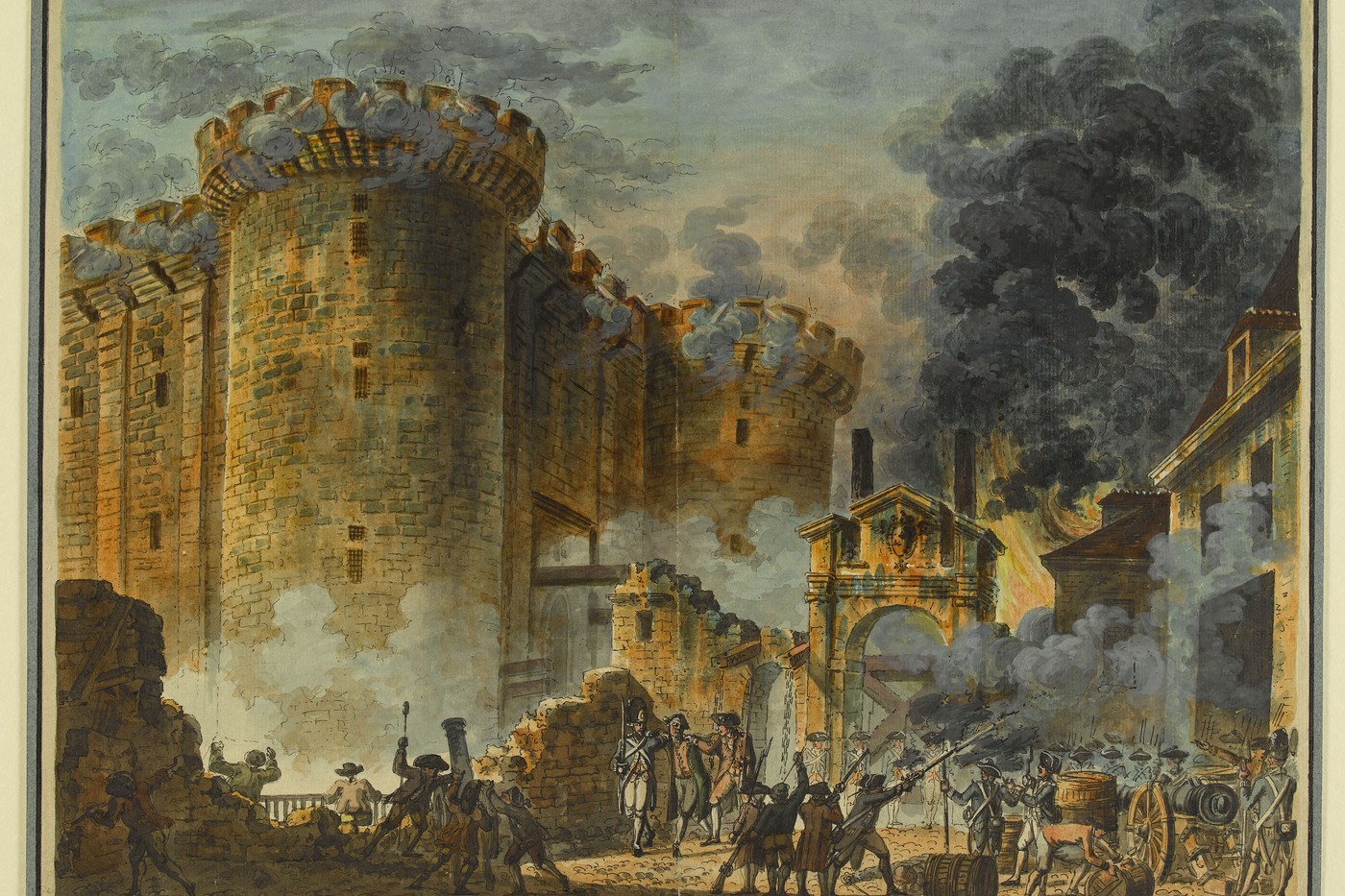
The storming of the Bastille on 14 July 1789 became a powerful symbol of resistance to arbitrary authority. The fortress-prison’s political and symbolic importance exceeded the number of people imprisoned there. The Élysée notes that only seven prisoners were found; the episode was not the release of a vast crowd of political detainees. Its significance cannot be measured simply by counting prisoners.
The event belongs within tensions in Paris and efforts to obtain means of defence, rather than outside its setting as an isolated gesture. It was decisive for popular mobilisation, but followed the Estates General and the June oath. The Bastille is consequently a central revolutionary landmark, not a sufficient explanation of every cause or the sole starting point of institutional change.
Streets and provinces also shaped politics
The Revolution did not unfold only between the king and deputies. Urban crowds, rural communities, women, workers and newly formed local bodies participated in different ways. The Musée Carnavalet documents, for example, changes to municipal authority in Paris and the creation of the National Guard. Decisions and pressures moved between institutions and public spaces.
This prevents us reducing events to a conversation between leaders whose decisions everyone else automatically obeyed. News, fears, material interests and expectations could mobilise people without giving them an identical programme. Paris was not a perfect reflection of every province either. A fuller account moves between different scales and asks how local circumstances interacted with national changes, rather than assuming that all communities experienced the same sequence in exactly the same way.
August brought privileges and rights into focus
On the night of 4 August, the Constituent Assembly proclaimed the abolition of feudal rights and various privileges, with conditions attached to some of them. This was not an immediate, complete remaking of every social relationship. Principles and implementation involved further stages, negotiations and disputes, which matter when assessing the practical consequences of a decree.
The Declaration of the Rights of Man and of the Citizen was adopted on 26 August. It asserted principles of liberty, legal equality and national sovereignty. Its historical importance is substantial, but proclaiming rights did not immediately guarantee equal participation to everyone. We must examine who could exercise particular rights in practice, including how women, colonial populations and different social groups were included or excluded.
The monarchy did not end in 1789
Early revolutionary change did not yet mean abolishing monarchy. The 1791 Constitution established a constitutional monarchy. In September 1792, amid war and political crisis, the Convention abolished royalty and began a republican regime. Louis XVI was executed in January 1793, not on the day the Bastille was stormed. Keeping these events separate is essential to a reliable chronology.
One common mistake compresses the whole decade into a single scene from 1789. Institutions, participants and objectives changed over time. It is inaccurate to assign every revolutionary of May 1789 the programme of a government formed years later. The trajectory should be studied as an open process, shaped by choices, conflict and responses to changing circumstances, rather than as the straightforward execution of an original plan.
Why the Revolution had different phases
Constituent Assembly, Legislative Assembly, Convention and Directory identify different institutional periods. War, internal conflict, popular mobilisation and repression repeatedly altered political relationships. Revolutionary violence belongs in this history, but should not be projected indiscriminately onto every day of the decade or every person who participated. The timing, actors and institutions of a particular episode matter.
Start a phase by identifying the institutions in place, the military situation and the groups competing for influence. Then compare announced principles with measures actually implemented. This approach avoids using liberty or repression as labels that replace investigation. A process can proclaim rights and also produce violent practices under particular circumstances. Those practices require explanation and scrutiny, rather than an automatic justification or an assumption that nothing changed.
What it means to end the Revolution in 1799
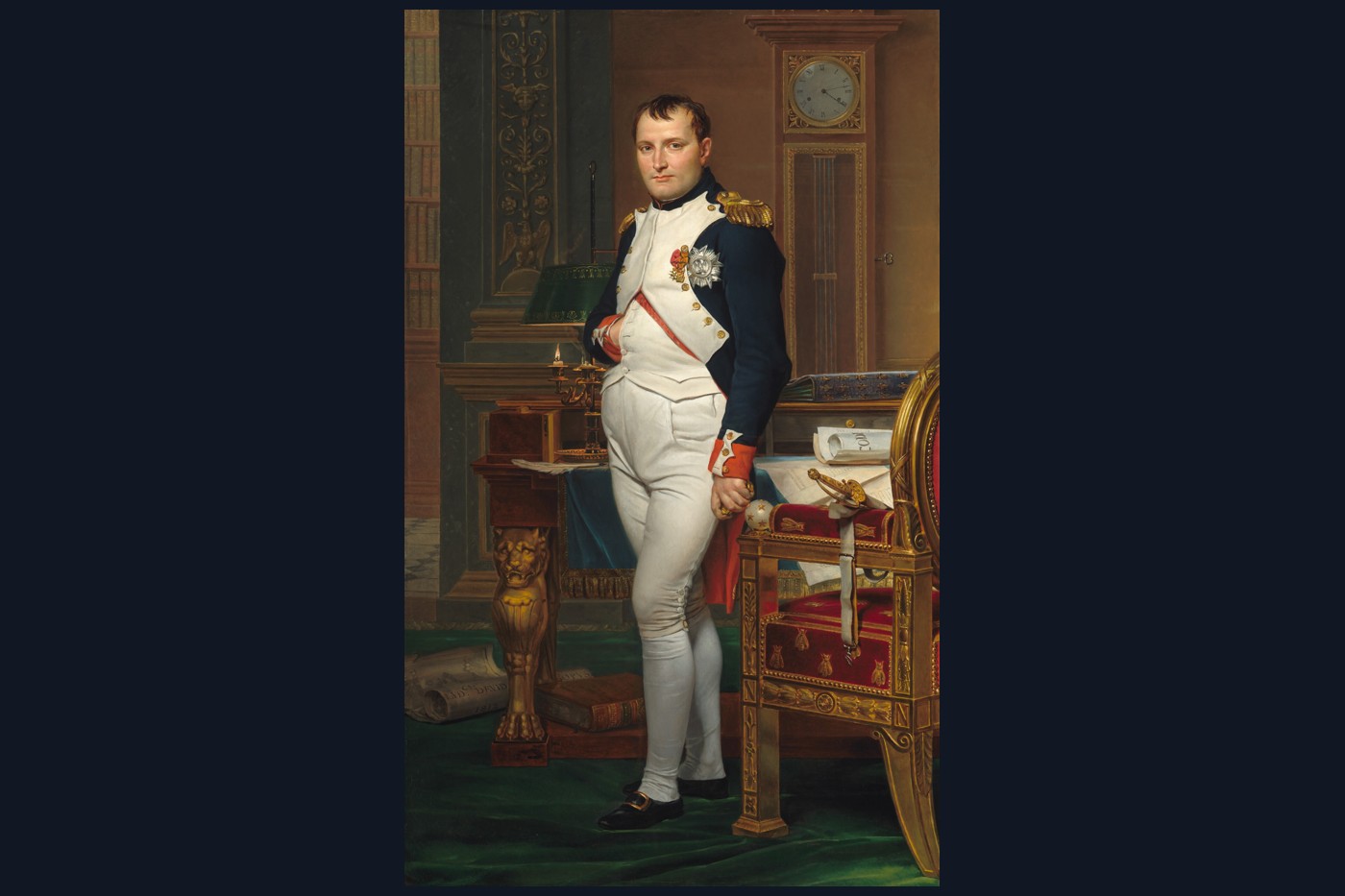
The coup of 18 and 19 Brumaire, Year VIII, corresponding to 9 and 10 November 1799, ended the Directory and opened Napoleon Bonaparte’s Consulate. It is a frequently used chronological boundary for the Revolution’s end. It does not mean every revolutionary change was reversed that moment, or that the whole inheritance of the previous decade immediately became settled.
The calendar also needs attention. Brumaire belongs to the republican calendar and is not simply another modern name for the entire month of November. The Consulate marked a specific change of power and government. Napoleon’s Empire began later, in 1804. Combining coup, consulate and imperial coronation into one event obscures both his career and the development of revolutionary institutions.
A chronology that keeps the main distinctions clear
A useful opening sequence is the Estates General in May 1789, the National Assembly and oath in June, the Bastille in July, and decisions on privileges and the Declaration in August. The constitutional monarchy of 1791, republic of 1792 and later phases then lead to the 1799 coup. Each landmark answers a different question about representation, authority or institutions.
France’s 14 July also recalls the Festival of the Federation in 1790; the annual national holiday was established in 1880. A commemoration is different from the original event. When examining a painting, document or ceremony, establish its date and context. That turns a list of familiar slogans into a history of profound political changes whose implementation, contradictions and limits remain important subjects for investigation.
Frequently asked questions
When did the French Revolution begin?
In 1789. The Estates General in May, the June events and the Bastille in July mark different aspects of its beginning.
Was the Bastille the only cause?
No. It was a decisive event within financial crisis, legal inequality and disputes over representation and authority.
What were the three estates?
Clergy, nobility and the Third Estate. The Third Estate included varied social groups and did not share one programme.
What was the Tennis Court Oath?
On 20 June 1789, deputies pledged not to separate before giving France a constitution.
Was the king executed in 1789?
No. Royalty was abolished in 1792; Louis XVI was executed on 21 January 1793.
What was adopted on 26 August 1789?
The Declaration of the Rights of Man and of the Citizen, asserting liberty, legal equality and national sovereignty.
Why is 1799 used as the end?
The coup of 9 and 10 November ended the Directory and opened the Consulate. It is a conventional boundary, not the disappearance of every revolutionary legacy.
Does 14 July commemorate only 1789?
National memory also includes the 1790 Festival of the Federation. The annual national holiday was established in 1880.
Sources and further reading
- Versailles — the Revolution and Estates General
- Versailles — the Tennis Court Oath
- National Assembly — revolutionary chronology
- National Assembly — the 1789 Declaration
- Élysée — the Bastille and 14 July
- Musée Carnavalet — revolutionary collections
- National Assembly — the end of monarchy
- National Assembly — the 1799 coup