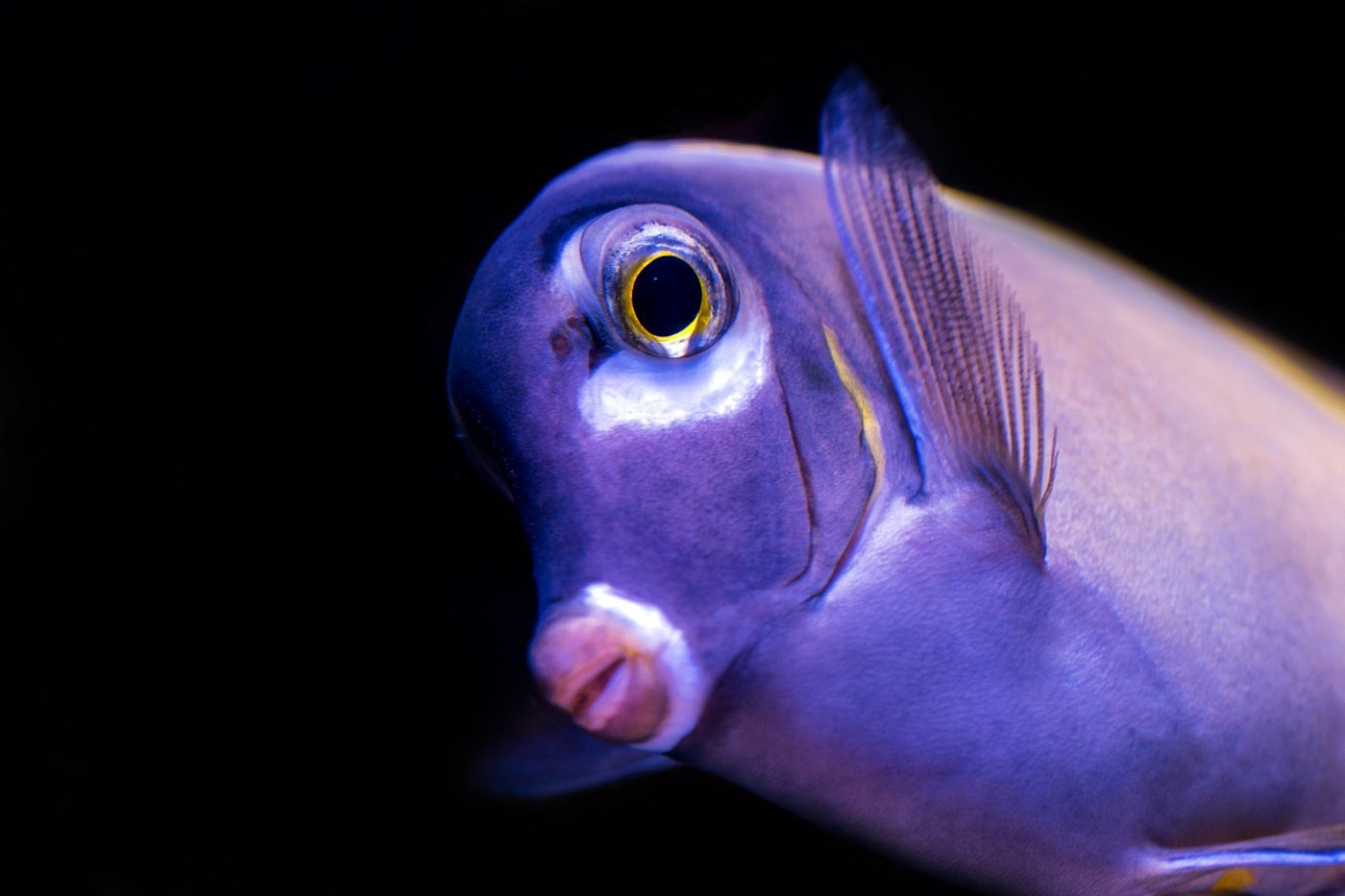
Do fish drink water?
Yes, many fish drink water, but not all in the same way. In marine bony fish, drinking helps replace water lost from the body to the salty environment. For freshwater fish, the usual problem is the opposite: water enters the body and the excess must be removed. Living underwater does not remove the need to control hydration. The key issue is the difference in salt concentration between the animal’s interior and its surroundings.
What is osmosis, in simple terms?
Imagine two compartments containing water with different concentrations of dissolved substances, separated by a membrane that lets water through. Water tends to move towards the more concentrated side. In animals, membranes and transport mechanisms are more complex, but this principle helps explain the challenge. A fish in the ocean and one in a river do not face the same relationship between their body-fluid concentration and the surrounding water. That is why one answer cannot cover every fish.
How do saltwater fish drink?
Many marine bony fish ingest seawater, absorb water through the intestine and remove excess salts, particularly through specialised cells in their gills. The kidneys also contribute to internal balance. Drinking salty water works here because a set of physiological adaptations handles the salts. The comparison cannot be applied directly to people. David H. Evans’s scientific review of osmoregulation explains how gills, intestine and kidneys take part in this system.
What about freshwater fish?
In freshwater bony fish, internal fluids are more concentrated than the surrounding environment. Water tends to enter through permeable surfaces, especially the gills. These animals produce large volumes of dilute urine and recover salts through transport mechanisms. In general, they drink much less than their marine relatives. Saying every fish spends the day drinking because it opens and closes its mouth confuses different processes.
Does opening the mouth mean drinking?
Not necessarily. Water passing through the mouth and gills is also involved in respiration: fish obtain oxygen through that exchange with the water. Watching mouth movements alone does not measure how much water is swallowed. Drinking, breathing and balancing salts all relate to the aquatic environment, but serve different functions. Likewise, a photograph of a fish with its mouth open does not prove it was thirsty.
Do all fish follow these rules?
No. The explanation above describes general patterns in bony fish; it should not be applied without qualification to sharks and other groups with their own strategies. Salmon and eels are interesting examples because they cross environments with different salinities during their lives. They adjust water and salt transport mechanisms to do so. You cannot simply move any fish from a freshwater aquarium into saltwater: adaptation depends on species and life stage.
Can we say they feel thirsty, then?
We can say they regulate water intake and balance. The subjective experience of thirst, as a person describes it, cannot be inferred from that behaviour alone or attributed equally to every species. The most accurate answer to the popular question is that many fish drink, especially marine bony fish, because they need to maintain water and salt balance. Being surrounded by water does not mean it is available to the body without any physiological cost.
Frequently asked questions
Can a fish lose water while in the sea?
Yes. In marine bony fish, the concentration difference favours water loss to the environment.
Do river fish drink as much as sea fish?
Generally not. In freshwater bony fish, water tends to enter the body and the excess is removed.
Are gills only for breathing?
No. Alongside respiratory exchange, they help control salts and internal balance.