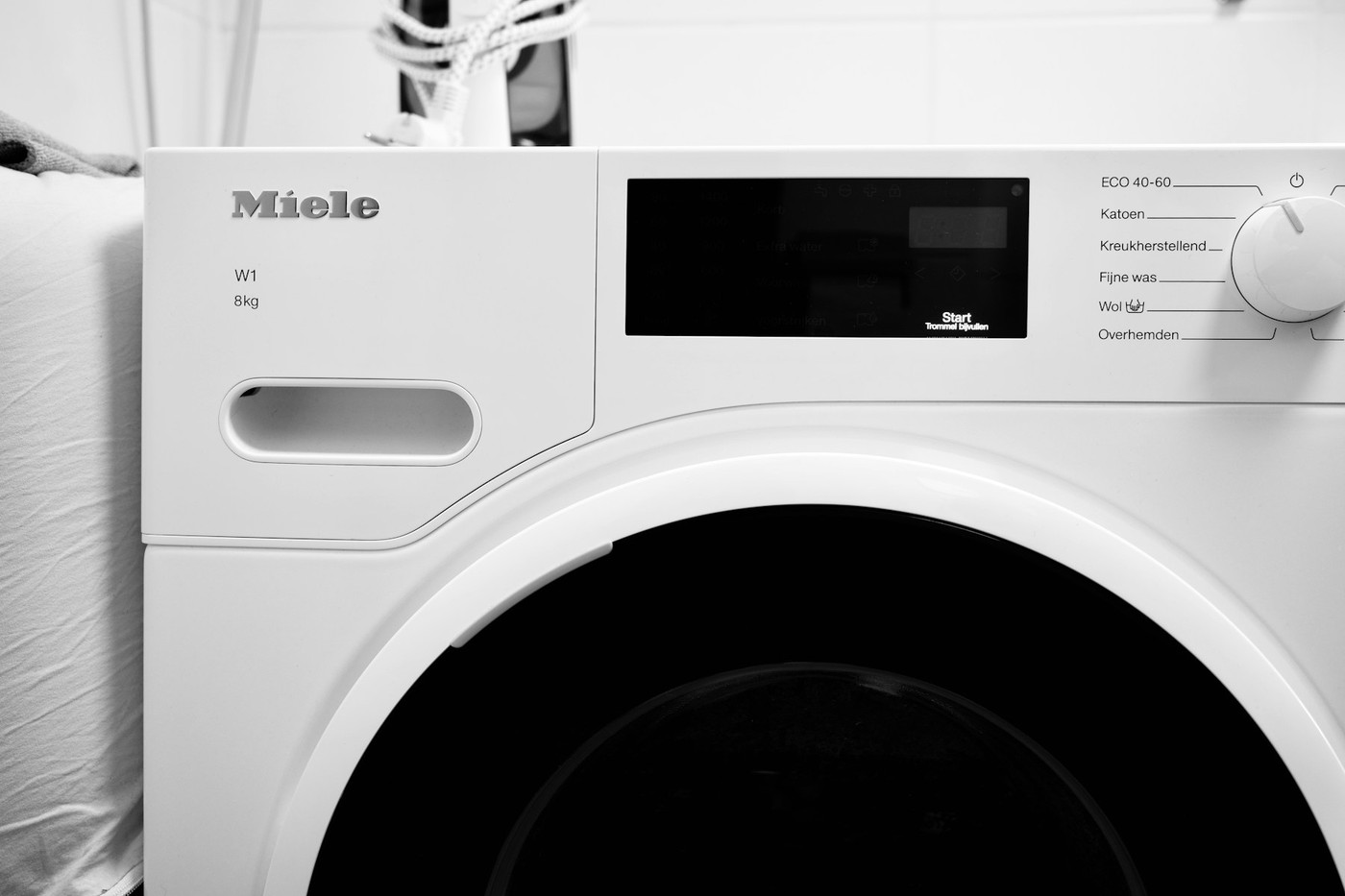
Read also: How to read laundry care symbols without mixing them up ↗
Read also: How to fill small holes in a wall before painting ↗
Start with the model and the type of residue
Cleaning a washing machine can involve several separate areas: the detergent drawer, door seal, drum and, where the user is meant to access it, the drain pump filter. A persistent smell does not prove that every part has the same problem. Look for deposits, standing water and changes in drainage before deciding which task is needed.
Find the manual using the appliance’s model reference, rather than just its brand name. A top loader may have different access from a front loader, and automatic dosing systems have their own requirements. This guide helps organise the work and recognise the limits of household maintenance. Removal points, products and operating instructions still need to match the actual machine.
Prepare the area and disconnect for manual cleaning
Remove the laundry and make sure no programme is running. Before manually cleaning the drawer, seal or accessible filter, unplug the machine with dry hands. If a hot cycle has just finished, wait for the water to cool. Prepare cloths, a soft brush, a shallow container and a towel to catch small amounts of escaping water.
Do not pull the cable or reach for a plug in a wet or unsafe position. Avoid moving a heavy machine alone merely to reach an access point. Keep children and pets away while working. Routine cleaning should not involve removing panels, opening electrical components or forcing a door that remains locked because water is still inside the drum.
Remove the drawer using its release mechanism
Pull the drawer to the specified position and operate the release button or catch described in the manual. Stop rather than forcing resistance. Some parts release with a slight lift; others have a side catch. With automatic dosing, check whether reservoirs need emptying first and which parts may be removed, rinsed or immersed. Different designs should not be treated as interchangeable.
For washable parts, soften deposits with warm water and remove them using a soft brush or cloth. Avoid metal tools that scratch plastic. AEG’s support instructions favour warm water without detergent or bleach for the drawer. That guidance does not mean every other model’s reservoirs, sensors and connectors can be soaked in the same way.
Clean the housing and conditioner siphon too
With the drawer removed, inspect its housing. Deposits around the top can obstruct water flow. Wipe accessible surfaces with a slightly damp cloth or suitable brush, without soaking the control panel or pushing debris into openings. If the conditioner compartment has a removable cover, follow the manual to clean its siphon and refit it correctly.
Conditioner left in the drawer may relate to residue or assembly, but water supply problems can also be involved. Dry the parts and check that everything is fully seated. A small cover forgotten beside the sink can leave a drawer looking complete while still working badly. Observe the recommended rinse test before concluding that the machine needs another dose of cleaning product.
Treat the door seal gently
On a front loader, inspect folds in the seal gently without stretching it or pulling fixed parts away. Remove accessible coins, hair or small objects, wipe the surfaces with a soft damp cloth and dry them afterwards. A small item of clothing trapped in this area can explain local water retention or an unpleasant smell.
Where a cleaning product is necessary, check its compatibility and dilution in the manufacturer’s instructions. Do not pour concentrated bleach directly onto the seal or scrub it with abrasive tools. A dark mark may not disappear completely with simple cleaning; repeated attempts with different chemicals can damage the material. A torn, distorted or leaking seal needs assessment rather than stronger scrubbing.
Use the correct drum-cleaning programme
Once manual cleaning is finished and parts are properly fitted and dry, restore the connections required by the manual to run the programme. If the machine has Drum Clean or a similar maintenance cycle, run it empty and follow its product and dosage instructions. Names and conditions vary, and some cleaning programmes do not use ordinary laundry detergent.
There is no maximum temperature that should automatically be selected on every appliance. One manufacturer’s advice for a hot cotton cycle does not replace another model’s instructions. Automatic dosing may need disabling for a maintenance wash. Check before starting so that an intended drum clean does not become an excessively foamy detergent cycle.
Do not combine vinegar, bicarbonate and bleach
A popular household trick does not establish compatibility with every machine’s seals, components and finishes. Vinegar is acidic, and generic suggestions can differ from specific manufacturer guidance. Use the product approved for the model and purpose, in the stated quantity. More cleaner is not automatically more effective, and a pleasant smell is not proof of proper maintenance.
Never mix bleach with vinegar, ammonia or other cleaning products. CDC guidance warns that mixing cleaners can release dangerous vapours. Do not layer mixtures because the first treatment seemed unsuccessful. Keep products in labelled containers, ventilate where instructed and follow their labels. Washing-up liquid is not a substitute for a dedicated appliance cleaner; it can create unsuitable amounts of foam.
An accessible pump filter may hold considerable water
Not every washing machine has an external filter that the user should open. Confirm the location and method first. With the appliance unplugged and water cool, position a shallow container and towels at the specified access point. Where there is an emergency drain hose, use it as described before unscrewing the filter cover.
More water may escape than expected, particularly after a drainage failure. Do not quickly open a cover while the drum is full. If it will not turn with the intended hand pressure, do not force it with tools that could crack or distort it. A jammed access point or internal obstruction may require service. The aim is to avoid turning straightforward maintenance into a flood.
Remove debris and refit without leaks
Where the manual allows filter removal, clear lint and loose objects and wash the part as directed. Check the seal and visible area without putting fingers into mechanisms or dismantling the pump. Finding a coin may explain a blockage, but it does not prove that the whole drainage circuit is now clear. Inspect the accessible parts without extending the job into an internal repair.
Refit the filter in the correct position and tighten as instructed, avoiding crossed threads. Replace the drain hose cap if it was used. Before returning to normal washing, run the stated check or rinse and watch for leaks. If water appears where it should not, stop safely and check the assembly or obtain assistance.
Set a schedule that reflects actual use
Some manufacturers advise a monthly maintenance cycle, while other models display a reminder after a number of washes. Usage, water hardness, products and visible deposits also affect what is needed. Use the manual as a starting point and record the last clean instead of relying on remembering only when a smell appears.
A practical routine might include removing objects from the seal after washing, drying wet areas and periodically checking the drawer and accessible filter. There is no need to dismantle everything after each load. Separating small frequent tasks from less frequent maintenance reduces effort and makes a change easier to notice, such as a drawer suddenly holding water when it did not before.
Reduce the conditions that encourage build-up
Dose detergent for the load, level of dirt and local water conditions. Excess can leave residue, while too little for a heavily soiled load is not a reliable solution either. Remove laundry when the programme ends and allow the door and drawer to ventilate where the maker recommends it, provided this is safe around children and pets.
Check pockets and place small items in suitable laundry bags. Do not overload the drum. Washing programmes must suit both clothing and appliance: a maintenance need does not justify washing all fabrics at a damaging temperature. Cleaning an empty drum and hygienically washing a particular load are different jobs. Each has its own conditions, products and purpose.
Recognise when a persistent fault needs service
If smells return immediately after correct cleaning, or there is standing water, repeated errors, leakage or unusual noise, consult the model’s troubleshooting instructions. A badly installed hose, drainage problem or damaged component may not be solved by another hot wash. Adding fragrance or conditioner only masks a symptom and can make the cause harder to distinguish.
Record the error code, programme and point in the cycle when the fault appears, along with maintenance already attempted. Do not continue using an appliance with a burning smell, damaged cable or water near electrical connections. Seek suitable assistance without opening panels. Recognising the boundary between accessible care and repair helps avoid further damage and gives a technician more useful information.
Frequently asked questions
Can I clean every washing machine with vinegar?
Do not assume universal compatibility. Check the manual and use products authorised for the model, materials and cleaning purpose.
Can bleach and vinegar be mixed?
No. The combination can release dangerous gases. Never mix bleach with other cleaning products.
Should I add detergent to a drum-cleaning cycle?
It depends on the programme. Some do not use ordinary laundry detergent. Follow the manual’s product and quantity instructions.
Does every machine have a filter I can open?
No. Confirm that there is an access point intended for users. Do not remove panels to search for a filter outside the stated procedure.
Why does water escape when the filter opens?
Residual water may remain in the circuit. Unplug, let it cool and follow the draining instructions first, with a container and towels ready.
Should I put concentrated cleaner on the seal?
No. Use gentle cleaning and only the product and dilution approved by the manufacturer; do not pour concentrated chemicals directly on it.
How often should I clean the machine?
Intervals vary. Some makers advise monthly maintenance or cycle-based reminders. Follow the instructions and adapt to usage and visible deposits.
What if the smell remains after cleaning?
Check model-specific drainage and fault guidance. Standing water, leaks, noise or a persistent smell may need service rather than additional chemicals.