The five families of clothing care symbols
Care symbols organise clothing treatment into five families: washing, bleaching, drying, ironing and professional textile care. In the GINETEX system associated with ISO 3758, these operations appear in that order. Identifying the main shape first prevents confusion between a professional-cleaning circle and a circle inside a square, which belongs to drying.
Read the complete sequence before choosing a programme. Knowing that a shirt can be washed does not settle questions about the dryer, bleach or iron. A garment can permit one process and prohibit another. Think of the sequence as a short instruction sheet: picking only the symbol you recognise leaves out restrictions that may make the difference between a successful treatment and permanent damage.
| Main shape | Operation | What to check |
|---|---|---|
| Tub | Washing | Temperature, bars and prohibitions |
| Triangle | Bleaching | Permitted type or prohibition |
| Square | Drying | Tumble drying or natural drying |
| Iron | Ironing | Heat and steam |
| Standalone circle | Professional care | Letters and restrictions |
The label describes the whole garment, not just its fibre
A percentage of cotton, wool or polyester describes the fabric, but does not replace care instructions. Garments also contain dyes, linings, interfacings, prints, decorative details and finishes. Two items with the same fibre composition can require different treatment. A general fibre chart may overlook the very component that is most sensitive.
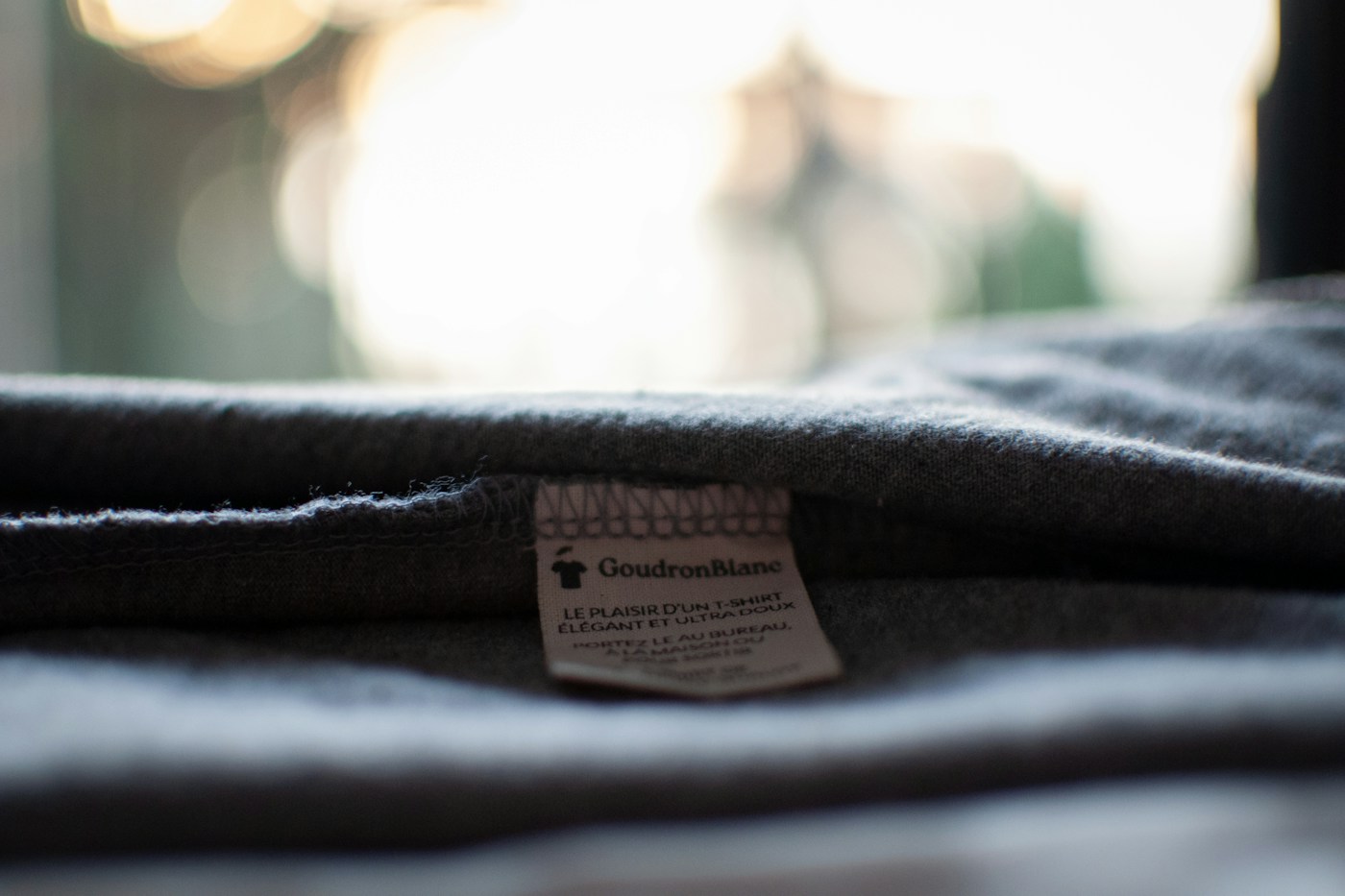
Look for the label in a side seam, neck or waistband and read both sides. Wording such as wash separately, remove an accessory or iron inside out adds to the symbols. If a detachable part has separate instructions, follow those for that part. Photograph the label while it is readable, especially before removing an uncomfortable one. Keep the garment identity with the picture so you do not swap instructions between similar-looking items.
The wash tub: its number is a limit, not a duration
A tub shape refers to domestic washing. Where it contains a number, that number is the maximum water temperature in degrees Celsius in the system described here. A tub marked 30 does not mean thirty minutes or require every wash to take place at precisely that temperature. A cooler cycle may be appropriate if the other care requirements are also respected.
Choose a programme by considering temperature, movement, load and spinning together. The words cottons or synthetics on a machine do not automatically translate every label symbol. Use the appliance manual to understand what each cycle does. Do not assume that a quick wash is gentler either: a shorter duration does not guarantee less mechanical action or a process suitable for that particular item.
Bars, a hand and a cross have different jobs
One bar beneath the wash tub requests a milder process; two request a very mild process. They do not tell you to add detergent or wash the garment twice. They limit mechanical treatment. The maximum capacity printed on a washing machine also does not mean that every delicate cycle can take that weight of clothing.
A hand in the tub indicates hand washing, subject to the associated temperature and instructions. Do not replace it with an arbitrary machine programme simply because that programme is called delicate. A crossed-out tub prohibits domestic washing, including a hand-washing experiment. Continue reading the professional-care options instead: a washing prohibition does not, by itself, select the correct alternative cleaning method for the garment.
The triangle: when is bleach allowed?
The triangle belongs to bleaching. In the GINETEX system, an empty triangle permits bleaching agents; two diagonal lines limit treatment to oxygen-based products and exclude chlorine bleach. A crossed triangle prohibits bleaching. Permission is not an instruction to add bleach to every wash: whether a treatment is allowed and whether it is needed are separate questions.
Read the formulation and instructions of detergents and stain removers before using them. A product advertised for white clothing or as multipurpose may be incompatible with a no-bleach label. Adding more product will not fix that incompatibility. Do not mix cleaning products to make a stronger treatment. For a stain, identify the fibre, the allowed care process and the instructions on the specific product first.
A square containing a circle means tumble drying
A circle inside a square refers to a tumble dryer. Dots limit the thermal treatment: one requests reduced temperature and two indicate a normal process in the GINETEX system. A crossed-out tumble-drying mark means that process should not be used. A programme called gentle does not cancel the prohibition printed on the garment.
The manual helps you match the actual appliance controls to the required treatment. A heat-pump dryer usually works at lower temperatures than some other dryers, but the care label still matters. Heat, rotation, time and the item’s construction work together. Group loads with compatible needs as well: waiting for every item to finish at the same moment may leave already dry garments exposed to unnecessary additional treatment.
Lines in the square: air drying also has instructions
When a square contains lines rather than a tumble-dryer circle, it refers to natural drying. A horizontal line means flat drying; a vertical line indicates line drying. Additional-line variants distinguish situations in which the article dries without first removing water by the usual process. An oblique line adds the condition that drying should take place in the shade.
Flat drying means supporting the item across its shape, rather than folding it over a narrow rail. Line drying does not mean that every garment must be put on a coat hanger: the particular instruction and construction help determine the support. Avoid uneven weight from retained water and direct sun where shade is required. The method used to remove water before drying must also respect the washing instructions.
Iron dots: why do temperature charts disagree?
An iron shape refers to ironing, and its dots indicate increasing heat levels. A crossed-out iron prohibits ironing. Current GINETEX guidance for ISO 3758:2023 gives maximum soleplate temperatures of 120°C, 160°C and 210°C for one, two and three dots. Older guides and appliances may show 110°C, 150°C and 200°C instead.
That difference is not a reason to raise the setting on an older iron. Match the specific label to the appliance manual; if uncertain, check with the manufacturer rather than adopting the highest figure you find. Observe steam restrictions too. Pressing longer or adding a cloth does not make a prohibited treatment acceptable. Decorative details and finishes may be damaged even when the soleplate does not touch them directly.
A circle and letters: information for the cleaner
A circle on its own belongs to professional textile care. Letters such as P and F distinguish dry-cleaning processes; W identifies professional wet cleaning. Bars can require gentler conditions. These letters are not instructions for choosing solvents at home and do not simply name a domestic washing-machine programme. A cleaner interprets them together with the garment itself.
A no-dry-cleaning mark does not automatically authorise hand washing, and permission for professional wet cleaning does not turn a home appliance into professional equipment. Keep the label with the garment when asking about a stain or delicate article. Explain what was spilled and anything already applied: that information can be as important as the printed symbol when the cleaner chooses a treatment.
Turn the symbols into a real washing decision
Imagine a label permitting washing at 30°C with two bars, prohibiting bleaching and tumble drying, and requesting flat drying. The decision involves more than setting 30°C. You need a very mild cycle, a compatible product without bleach and a suitable surface for drying. If ironing is needed, its own symbol must also be read.
Compare all relevant restrictions before combining garments. Two pieces of the same colour may require different programmes. Empty pockets, check fastenings and follow any accessory instructions. Detergent dosage should match the product, load, soiling and local water conditions. A little preparation prevents trying to correct an incompatibility after clothing has already shrunk, lost its shape or changed colour. A wash load is a collection of care needs, rather than merely a pile of similar fabrics.
Imported, missing and faded labels
An international guide helps identify shapes, but does not mean every country uses identical conventions. The FTC explains that the ASTM system used in the United States resembles ISO but is not identical. With imported garments, read words, units and manufacturer guidance rather than translating dots or numbers from memory based on another label.
If a label has disappeared, look for the product page, purchase record or brand information. Fibre composition cannot recreate all the tests on a finished garment. For valuable, complex or sentimental items, an assessment may prevent an irreversible experiment. A colour test in a hidden spot does not prove the whole item will withstand washing, spinning or heat. Missing instructions are not permission for the strongest available treatment.
A short routine that makes clothing care easier
Before the first wash, take a moment to identify the shape, limit, bars and prohibitions. Save a clear label photograph with the garment’s name and compare it with the appliance instructions. Once you find a combination that respects the label and works, repeating it is easier than decoding everything again every week.
Review the routine when changing your machine, detergent or drying method. Symbols describe treatments an item can tolerate; they do not guarantee removal of every stain or promise new-looking clothes. The practical aim is to choose compatible care and avoid preventable damage. Starting with the label reduces unnecessary experiments, helps you use existing products appropriately and shows when a garment needs a cleaner rather than another domestic wash.
Frequently asked questions
Does 30 in the tub mean thirty minutes?
No. In the ISO/GINETEX system it is the maximum water temperature in degrees Celsius. The cycle must also respect any bars and the other care instructions.
Do one bar and two bars mean the same thing?
No. One requests mild treatment; two request very mild treatment. They limit mechanical action rather than specifying detergent quantity.
Can I hand wash a crossed-out tub item?
No. That mark prohibits domestic washing, including hand washing. Read the other symbols to identify any permitted professional treatments.
Does a crossed triangle prohibit only chlorine bleach?
Not in the current GINETEX system: it prohibits bleaching. A triangle with two diagonal lines permits oxygen bleach while excluding chlorine.
Can a heat-pump dryer ignore a no-tumble-dry label?
No. A lower temperature does not remove the other effects of the process or replace garment instructions.
Why do iron guides show both 110/150/200°C and 120/160/210°C?
References come from different editions and equipment. Current GINETEX/ISO 3758:2023 guidance uses 120/160/210°C. Check the label and manual; do not increase heat simply because a newer chart is available.
Does W in a circle mean machine washing?
No. It means professional wet cleaning with specialised equipment and processes.
Can any cotton programme be used for a 100% cotton item?
No. Dyes, finishes, linings and decorative details also matter. Instructions for the whole garment take priority over a general fibre rule.