A city before it became an image of disaster
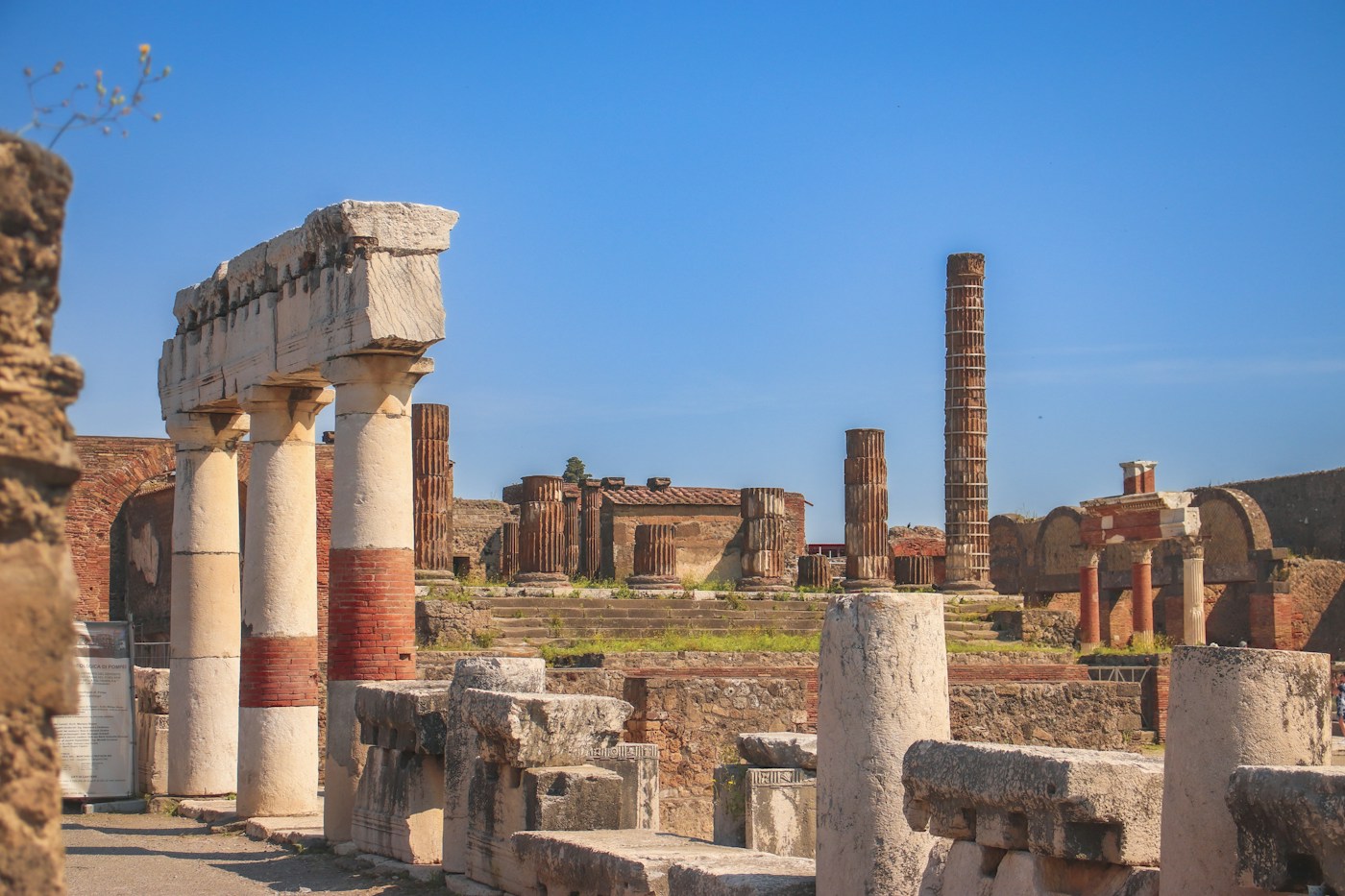
The eruption of Vesuvius in AD 79 defines a major moment in Pompeii’s history, but the city is more than its final day. Streets, buildings and objects support research into activities and social relationships. When looking at a photograph, ask how the space worked in an inhabited city. A house was not merely scenery: it had entrances, uses and alterations. Archaeology approaches these questions without completely recovering each person’s experience.
Evidence and interpretation differ
A surviving wall is evidence; explaining a room’s function may require several clues. Labels and publications show what supports an interpretation. Hypotheses do not all carry the same degree of certainty. When a news story describes a discovery, find its source and distinguish an established finding from a proposal still being investigated. A convincing narrative does not replace documentation.
What can the House of the Vettii tell us?
Take the House of the Vettii. Its columned garden, or peristyle, shows the layout; surviving paintings show decorative choices. Today’s appearance also reflects conservation: the house reopened in January 2023 after restoration. When comparing photos, separate the surviving evidence, interpretations of how the space was used and what was restored.
Notice the work of conservation
What we see today reflects excavation, protection and presentation decisions. Reconstructed or stabilised parts may be needed to conserve structures. Do not assume every visible feature is exactly as it stood at the eruption. Consult institutional conservation information and respect restricted areas. Touching an old surface or crossing a barrier for a photograph can damage what makes visits possible for others.
Prepare a visit or research from home
Choose a small set of themes, such as water, food or movement through the city. Consult official maps and materials, checking current access conditions with the park. From home, compare located, captioned photographs instead of collecting anonymous images. Record one observation, its source and an unanswered question. This simple record helps prevent a hypothesis becoming a certainty merely through repetition.