Does honey go bad, or can it last forever?
Pure honey, properly produced and stored, can remain suitable to eat for years. Its combination of concentrated sugars and little available water makes it difficult for many microorganisms to grow. That longevity does not mean you can ignore the container, contamination or changes in the product. A jar of honey is not the same thing as a sterilised preserve.
Three separate questions often become confused: food safety, quality and texture. Honey may darken, lose some aroma or develop crystals without automatically becoming unsafe. It may also ferment when storage conditions are no longer suitable. The familiar claim that honey never spoils is an interesting starting point, but a useful decision in the kitchen requires understanding what has actually changed inside the jar.
Preservation begins with the bees
Nectar gathered from flowers does not have exactly the same properties as the mature honey poured into a jar. Bees use enzymes to help transform its sugars and remove excess water. That processing produces a concentrated energy reserve for the colony. The resulting combination also explains why honey can keep much longer than a sweet drink left on a kitchen counter.
The key expression is available water. A food can contain water while making relatively little of it available for microbial growth, because its composition affects water availability. In honey, the high sugar concentration is an important barrier. Diluting it substantially changes that barrier. Adding a spoonful of honey to a cup of tea does not give the tea the storage life of the honey that was in the jar.
Acidity matters, but honey is not sterile
Sweetness hides another property: honey is generally acidic. In a study of honeys from Portugal's Entre-Douro e Minho region, researchers measured pH values between 3.29 and 4.06. Those measurements describe a particular group of samples, rather than a compulsory chemical recipe for every honey. Floral origin and other characteristics help explain the variety between products.
Concentrated sugar and acidity create a difficult environment for many microorganisms; they do not mean every organism has disappeared. Spores and other microbes can remain without multiplying. This distinction has practical consequences: preventing growth within a food is different from removing all contamination. It explains why a long-lasting product can have an important restriction for babies and why different precautions apply when other ingredients are added.
Why does honey turn thick or grainy?
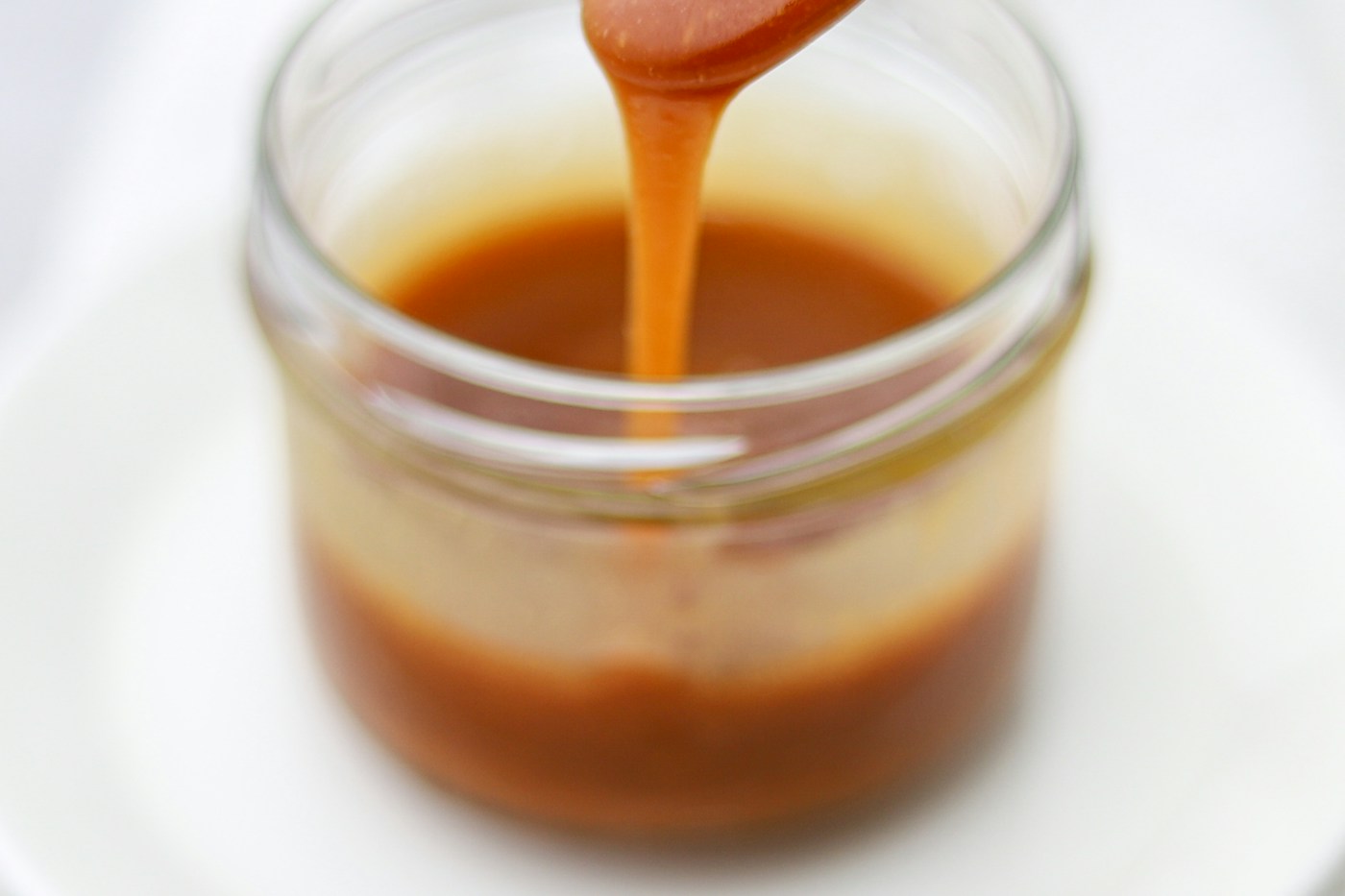
Crystallisation is a physical rearrangement of some of the sugars. Glucose forms crystals more readily than fructose, and their proportions depend on the nectar gathered by bees. Particles in honey can also provide starting points for crystallisation. Two jars bought on the same day may therefore develop different textures without one necessarily being fresher or better.
Grainy, cloudy or thick honey is not spoiled merely because of its texture. Creamed honey is deliberately made by controlling crystallisation to produce a smooth, spreadable consistency. Texture cannot establish at home whether honey is authentic or adulterated, either. Authenticity requires suitable analysis and traceability; seeing how quickly a sample runs off a spoon is no substitute for those checks. A natural physical change should not be turned into a supposed purity test.
How to make crystallised honey runny again
If crystallisation is the only change, you can enjoy the honey as it is or warm it gently. Place a suitable jar in warm water and stir with a clean, dry utensil. Keep water out of the honey and avoid thermal shock to glass. The aim is to dissolve crystals, rather than boil the contents or let the container sit against intense heat.
Repeated or strong heating can damage aroma and other quality characteristics. Heating is also not a universal safety treatment. If there are signs of fermentation or contamination, a warm-water bath is not a way to rescue the product. These are different tasks: softening crystallised honey addresses texture, whereas judging a changed or contaminated food addresses safety. The fact that both can involve a thick or unusual-looking jar does not make them interchangeable.
When honey ferments and what to do
Some yeasts tolerate highly concentrated sugar solutions. The FAO explains that the chance of fermentation depends on factors including moisture, temperature and the number of yeasts present. Honey harvested with too much water, an open jar in humid surroundings or the addition of wet ingredients can change the balance that previously helped preserve it.
Persistent bubbling, gas production and an unexpected sour or alcoholic smell deserve attention, particularly when they occur together. Oregon State University advises discarding honey that shows signs of fermentation. Do not taste a suspicious product to test it. A single air bubble introduced by stirring is not proof of fermentation, but the absence of an obvious visible change cannot be treated as a universal guarantee of safety, either.
Storing the jar and treating mixtures differently
Keep honey in a tightly closed food-grade container, somewhere dry and protected from direct sunlight and heat sources. Use a clean, dry spoon and replace the lid after serving. Refrigeration is not normally necessary for plain honey in everyday use and may encourage a crystallised texture under ordinary conditions. Always follow the manufacturer's particular storage instructions.
Honey containing fresh garlic, fruit, damp herbs or other additions should not automatically inherit the storage rules of plain honey. Added moisture may allow microorganisms to grow. Follow a validated preservation recipe with clearly defined preparation and storage requirements. A homemade mixture prepared for immediate use should also not be treated as equivalent to a commercial product whose formulation and stability have been assessed.
Why babies under one year must not have honey
The CDC recommends no honey before 12 months, including in food, water, infant formula or on a dummy. The concern is infant botulism: Clostridium botulinum spores can enter a baby's intestines, grow and produce toxin. This restriction still applies when honey looks normal and comes from a reputable shop. An appealing smell or an intact lid does not remove the age-related risk.
Pasteurised honey is not a safe exception: the Government of Canada includes pasteurised and unpasteurised honey in its prevention advice. If a baby has already eaten some, that does not mean illness is inevitable. Seek clinical advice and watch for symptoms such as feeding difficulties, weakness or a weak cry. Breathing difficulties or significant weakness require urgent medical help.
What the label date and colour actually tell you
Read the date information and storage instructions on the label. A best-before date concerns the product's expected quality under the stated conditions; it is not a laboratory test of the particular opened jar in your cupboard. It should not be confused with the claim that honey stored in any circumstances stays unchanged. Quality matters even when there is no dramatic sign of deterioration.
Colour varies with origin and can change during storage; it cannot by itself establish a safe storage period or a health ranking. When buying, look for an identified producer, clear origin information, sound packaging and clear labelling. When using honey, consider its condition and storage history. Long shelf life depends on preserving the conditions that support it, rather than imagining that honey sits outside the ordinary rules of food handling.
Frequently asked questions
Has crystallised honey gone bad?
Not necessarily. Crystallisation is a natural change in the sugars and does not on its own indicate spoilage. Gas production or an unexpected smell requires a different assessment.
Must honey be refrigerated?
Plain honey in everyday use generally does not need refrigeration. Keep it tightly closed, dry and away from heat, following the label. Mixtures containing other ingredients may need different storage.
Can I add water to make a jar runny?
Avoid adding water to honey you intend to store. It changes the conditions that inhibit microbial growth. Instead, gently warm a suitable container in warm water without letting water enter it.
Are fermentation and crystallisation the same thing?
No. Crystallisation changes the arrangement of sugars. Fermentation involves microorganisms and may produce gas and sour or alcoholic odours. Honey showing fermentation should be discarded.
Can a baby have pasteurised honey?
Not before 12 months. The recommendation covers pasteurised and unpasteurised honey because of the risk of infant botulism.
Does liquid honey prove it is pure?
No. Texture depends on composition and storage conditions. Neither a runny consistency nor crystals can establish authenticity at home.
Sources and further reading
- Oregon State University — honey safety and storage
- University of Minnesota — honey crystallisation
- FAO — processing and prevention of fermentation
- Purdue Extension — honey types and storage
- CDC — foods to avoid before 12 months
- California Department of Public Health — honey and infant botulism
- Government of Canada — causes of botulism
- Study of Portuguese Entre-Douro e Minho honeys — composition and acidity