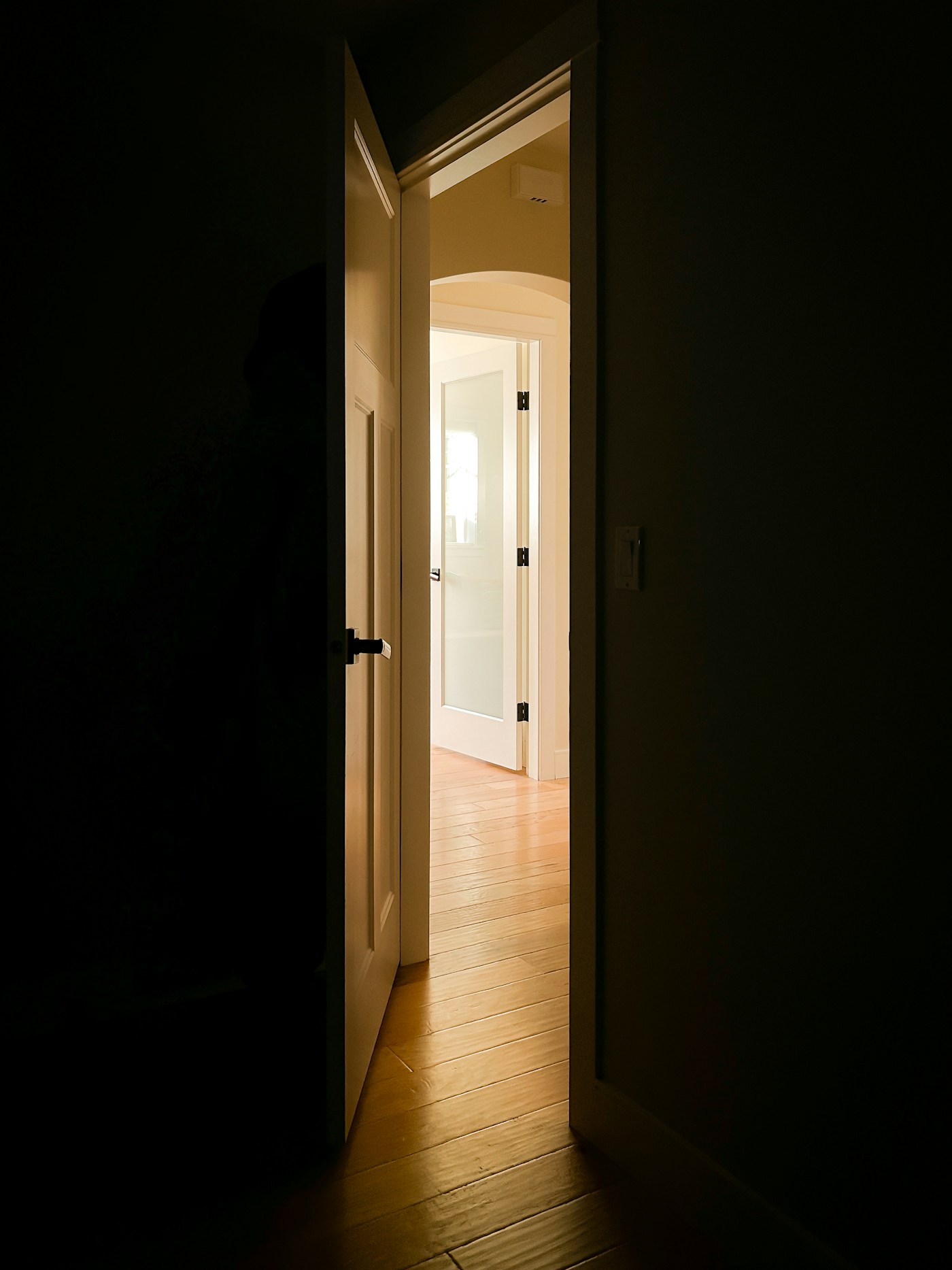
Does a doorway erase your memory?
Not literally. The ‘doorway effect’ names a line of research into memory and changing context. Studies compared recall for objects when people remained in a room or moved into another. One interpretation is that experience is organised into events and crossing a contextual boundary can change access to recent information. That does not make a door a switch that erases memories, or automatically explain every occasion when an intention slips away. The phrase is a useful introduction, not a complete explanation of daily forgetting.
Does the effect appear in every study?
No. A 2021 investigation ran four experiments and found no significant general doorway-related forgetting effect. Under a memory-load condition, however, it found greater susceptibility to interference. This shows why the popular explanation needs care: different tasks, conditions and measurements can produce different findings. Other work has found effects of moving between rooms. A responsible conclusion is that context can matter, but there is no simple rule making everyone forget whenever they cross a doorway. The studies’ limits belong alongside their findings.
Why does the situation feel so familiar?
Imagine going to the kitchen for a mug and noticing dishes, a message or another task on arrival. The experience seems to fit the name, but a personal situation is not a controlled experiment. Several things may change together, including what you see and what you are doing. Separate ‘what happened to me?’ from ‘which mechanism did a study demonstrate?’. A similar-sounding story does not establish the cause of that particular lapse. An everyday example can explain a question without serving as proof of the answer.
What practical strategy could you try?
Before leaving, state a specific task: ‘I am getting the blue mug.’ For important tasks, use a short list or an appropriate reminder. Try finishing one step before opening another task and keep frequently used objects in predictable places. These are practical organisation suggestions rather than treatments or outcomes guaranteed by the cited experiments. Try one at a time and observe whether it helps. Introducing several elaborate systems at once can make a routine harder rather than easier to follow.
Does returning to the previous room guarantee recall?
No. You can reconstruct the sequence: where you were, what object you noticed and what step came next. A cue may sometimes help recover an intention, but the trick is not a scientific law. The cited studies examine particular tasks and cannot assess a person’s memory from a single episode. The photograph illustrates movement between rooms; it neither documents an experiment nor proves the effect. Everyday curiosity is a useful starting point for reading research while paying attention to its limits.