Ingredients for four small portions
Prepare 240 g of cooked, drained chickpeas, 30 g of tahini, one tablespoon of lemon juice, two tablespoons of olive oil, half a small garlic clove and three to five tablespoons of cold water. Season with salt to taste. Add a pinch of cumin if you enjoy it. Tahini is a sesame paste contributing to both flavour and texture. This recipe starts with already cooked chickpeas and takes around fifteen minutes.
Make the first mixture
Put tahini, lemon juice, oil, garlic and three tablespoons of water in a food processor or a container suitable for a hand blender. Blend briefly, following equipment instructions. Add chickpeas and blend again, stopping to scrape the sides with the appliance switched off. The mixture may be thick initially. Avoid immediately correcting it with a large amount of oil, which changes the recipe’s balance.
Add water gradually
Add more water one tablespoon at a time, blending between additions until the desired consistency is reached. A spread can be firmer than a sauce for coating other ingredients. Equipment capacity and chickpea softness influence the result. If large pieces remain, continue in intervals and check the mixture circulates. Do not insert utensils while the blade is running. Work in small quantities if the appliance cannot move the mixture.
Taste before finishing
Adjust salt and, if necessary, add a few drops of lemon. Begin with a small amount if using cumin. Garlic can quickly dominate a small batch, so half a clove is a starting point rather than an invitation to add more without tasting. Stir with a clean spoon and check that texture remains suitable after adjustments. Focus on one element at a time to understand each addition’s effect.
Serve in different ways
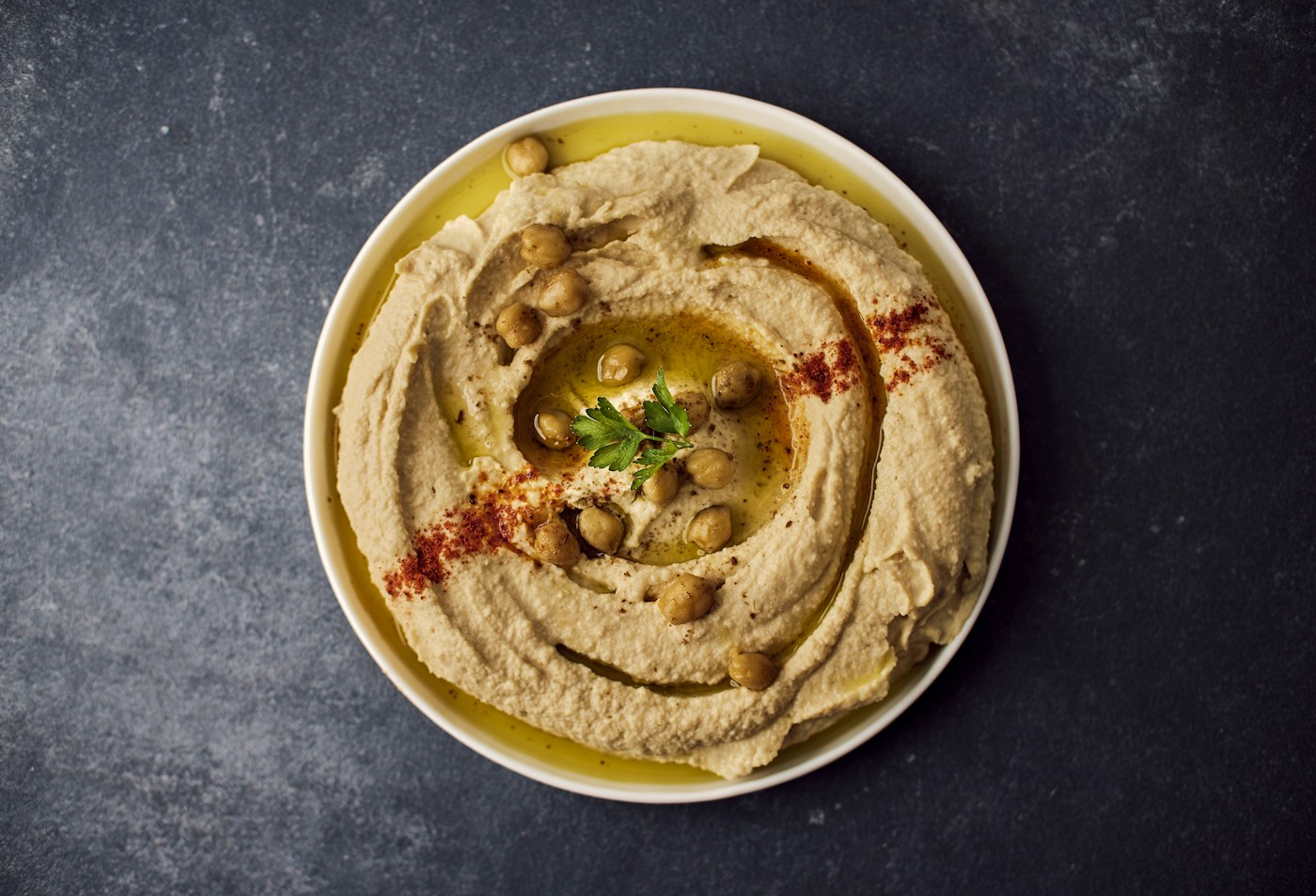
Spread in a bowl and accompany with bread or vegetables prepared for eating. A small drizzle of oil on top is optional. For variation, blend in a little well-drained roasted pepper, knowing it changes flavour and moisture. The recipe provides a base for experimentation rather than declaring one version the only traditional way to prepare hummus. The photograph is illustrative and may show ingredients or accompaniments outside this preparation.